Author: Hijaz Moosa

  • Creative Output Mastery: What Separates the Top Media Production Companies in Dubai?

    Creative Output Mastery: What Separates the Top Media Production Companies in Dubai?

    The Untold Truth About Media Production Companies in Dubai

    When brands start looking for media production companies in Dubai, they usually search for the wrong things. They hunt for a studio with a “secret” technology pipeline, a massive full-time roster of directors, or exclusive access to retained, world-renowned talent.

    But in the real world of creative film production, those things are mostly myths.

    I’ve spent years in this industry, and I’m going to give you an unfiltered, behind-the-scenes look at how this market actually operates. I want to show you what genuinely separates a “good” media production house from a true master. From the distinct philosophies that define local studios to the reality of how we actually hire world-class colorists and directors (hint: we don’t put them on retainers), this is a no-BS guide to creative output mastery.

    If you’re ready to discover the true, human differentiator behind award-winning creative video ads, let’s pull back the curtain.

    The 3 Philosophies of a Media Production House in Dubai

    If you look closely at the landscape of the top media production houses in Dubai, you’ll realize that a company’s creative output isn’t random. It stems directly from the foundational philosophy they operate on.

    In my experience, almost every media production house in Dubai falls into one of three distinct categories.

    Service vs. Craft: Where Do You Stand?

    First, you have the purely service-based production houses. These are companies that focus strictly on logistics. You hand them a storyboard, and their goal is simply to execute it exactly as drawn. They will book the location, rent the camera, hire the crew, and deliver the file. They provide a service, but they rarely challenge the creative or push the emotional boundaries of the film.

    On the opposite end of the spectrum, you have the fully craft-based production houses. These teams are entirely obsessed with the art. They agonize over every pixel, every shadow, and every lens choice. While their work can be incredibly beautiful, they sometimes lose sight of the client’s actual business objectives or budget constraints because they are so deeply entrenched in the “art” of creative film production.

    Striking the Middle Ground

    Then, you have the third category—the middle ground. This is exactly where my team and I sit at Hanzo Films.

    What separates the best media production companies in this region is the ability to find that perfect balance. We prioritize execution and logistics so the client feels safe and supported, but we never compromise on the creative craft that makes the audience feel something. We don’t just execute a brief; we elevate it. We bring our own creative point of view to the table, ensuring the final output serves both the art and the brand’s bottom line.

    The Great “Retained Talent” Myth in Creative Film Production

    There is a massive misconception among clients that top production houses keep a roster of exclusive, world-class talent locked down on retainer. People assume we hoard the best directors, cinematographers, and editors in a back room somewhere.

    I’ll be honest with you: we don’t retain any of them.

    Hiring for the Genre, Not the Roster

    My approach to building a team for your project is entirely agile. All of our talent is hired based on a very specific kind of previous showreel that matches the exact emotional needs of your film.

    If you come to me wanting a comedy, I am going to find a specialist who knows how to pace and light a joke. If you want a heavy, emotional drama, I am going to look for a colorist who specializes in making the frame look dramatic, moody, and intense. If the campaign is about children, I’m bringing in a colorist and director who know how to make the film look as bright, colorful, and attractive to kids as possible.

    “We don’t hire for the roster; we hire for the exact emotional need of your film.” > — Hijaz Moosa, Founder of Hanzo Films

    If I just used the same three retained guys for every single project, your bright kids’ commercial would end up looking like a moody drama. That’s why hiring for the genre always beats hiring from a static roster.

    Why Elite Talent is Just “One Email Away”

    Here is a major industry secret: the absolute best talent in the world is not hiding behind a corporate gatekeeper.

    “Any good talent is just one email away. Everybody can attract the same talent.”Hijaz Moosa

    High-end freelancers operate globally. Whether they are based in London, Los Angeles, or right here in the UAE, if you have a great project, a solid reputation, and the right budget, they will work with you. What gives me an advantage isn’t a restrictive contract with these artists; it’s the network, the relationships, and the mutual respect we’ve built over years of collaborating on great creative video ads.

    The Tech Delusion: Why Cameras Don’t Create Masterpieces

    Clients frequently ask me, “Beyond the camera, what is the most strategically valuable technology or pipeline that empowers your team to achieve unique results?”

    I’m always upfront with my answer: there is no such technology.

    It’s a delusion to think that buying a specific camera or a proprietary piece of software will automatically generate award-winning work. The truth is, everyone at the top level of this industry has access to the exact same gear. We all use the same ARRI Alexas, the same editing suites, and the same lighting rigs.

    Chasing technology is a distraction from what really matters.

    The Human Element as the Ultimate Differentiator

    If the cameras and software are the same, what actually creates a masterpiece?

    The human element.

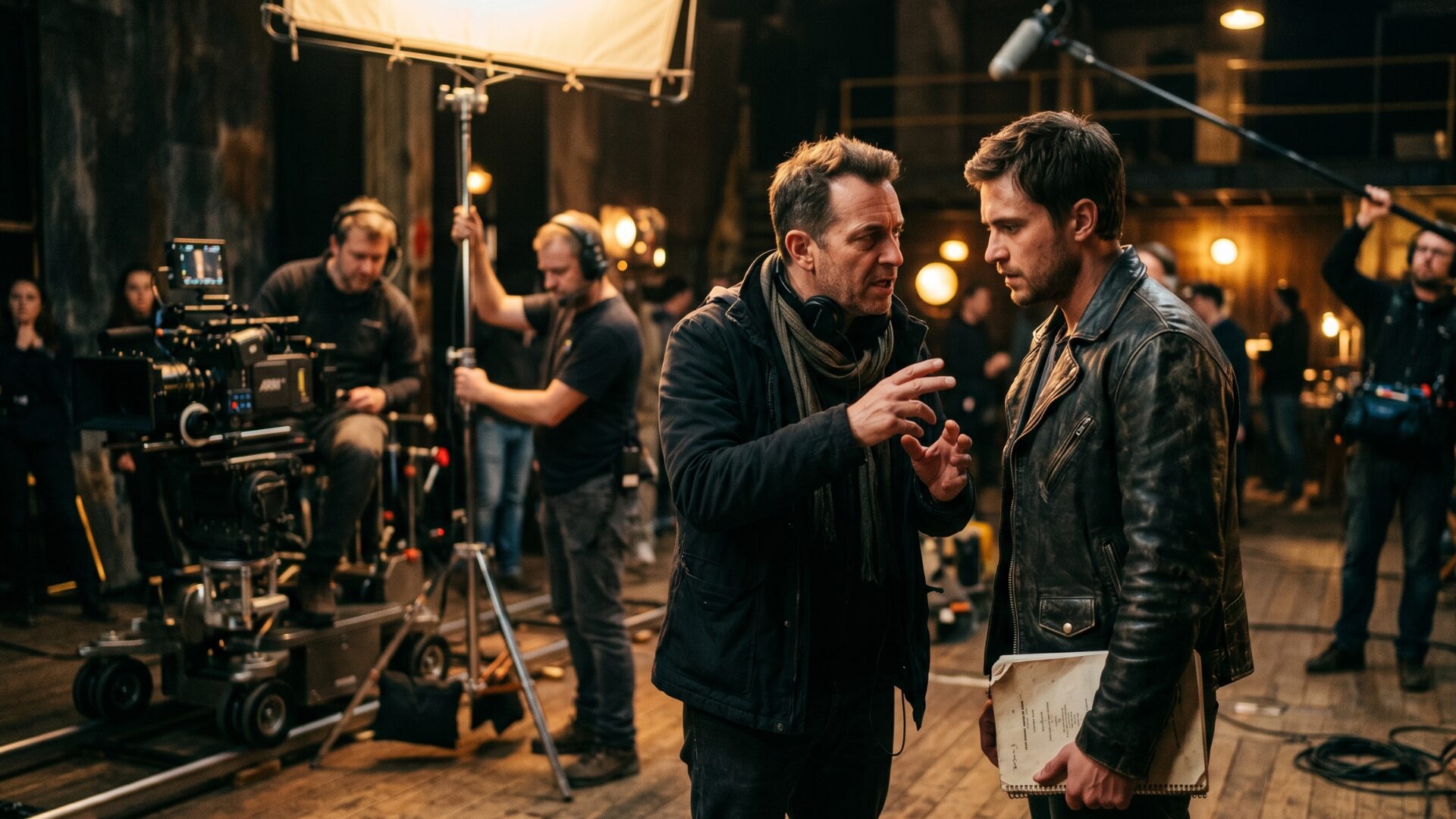
    The difference lies entirely in the human beings operating those tools. It’s in the taste of the director. It’s in the specific way a DOP decides to shape a light. It’s in the dynamic collaboration between my team, the agency, and the client. It’s the late-night decisions, the rehearsals with actors, and the unyielding commitment to telling a story with a “beating heart.”

    Technology doesn’t have taste. People do. The mastery of creative output doesn’t come from a pipeline—it comes from a group of dedicated human beings making thousands of micro-decisions correctly.

    The Reality of the Market

    When you strip away the corporate buzzwords, the reality of finding the right production partner is incredibly simple.

    Output mastery doesn’t come from hoarding talent on retainers, and it certainly doesn’t come from a magical piece of technology. It comes from a core philosophy that balances flawless service with elite craft. It comes from having the agility to hire the absolute perfect human being for your specific genre of story.

    If you are a brand looking for media production companies in Dubai that value the human element over industry myths, you’re in the right place. My team and I don’t hide behind buzzwords. We just do great work.

    If this approach resonates with you, I’d love to discuss how we can bring your next campaign to life.
  • Video Production for Ads: A 2026 Playbook for Maximizing Engagement

    Video Production for Ads: A 2026 Playbook for Maximizing Engagement

    Video Production for Ads: My 2026 Playbook for Real Engagement

    I’m Hijaz Moosa, founder of Hanzo Films.

    If you read enough marketing blogs, you’ll start to believe that by 2026, high-end video production will be dead. You’ll read that audiences only want “imperfect,” “lo-fi,” or “user-generated” style content. You’ll read that “authenticity” means shaky cameras and bad lighting.

    I am here to tell you: They’re wrong.

    I live in the real world of production. I have a regular set of clients ranging from regional powerhouses to global brands, and I follow the work coming out of the top studios globally. I am not seeing a shift toward imperfection. In fact, I’m seeing the exact opposite.

    In high-stakes video production for ads, my clients are trying to achieve as much perfection as possible. They want the craft. They want the polish. They want the magic that only high-end production can deliver.

    So, if the “imperfect content” trend is a myth, what does the actual 2026 playbook look like?

    Here is what I see on set every single day—and how I’m advising my clients to maximize their engagement this year.

    The Myth of “Imperfect” Content (And What I Actually See Happening)

    Let’s be honest: “Imperfect but real” is a nice marketing buzzword, but it’s not a production reality.

    There is no global shift toward messy content. Content is random. It is entirely case-by-case. Sure, there is a section of content that is “real” and raw, and there is a section of content that is highly staged and cinematic. Both exist. Both work.

    But simply lowering your production standards in the name of “authenticity” is a trap.

    In my experience, authentic video content production doesn’t come from bad lighting; it comes from honest storytelling. You can have a beautifully lit, cinematically shot film that feels incredibly authentic because the emotion is real. Conversely, you can have a shaky iPhone video that feels completely fake because the acting is stiff.

    The market isn’t demanding lower quality; they are demanding higher relevance.

    The Only Real Shift I See: AI Content Creation

    If we are talking about actual shifts in the industry—not just marketing fluff—the only massive change I am seeing is the integration of AI.

    But we need to be very specific about what that means. We aren’t seeing a shift toward “AI videos” replacing human creativity in the final output. We are seeing a massive shift toward AI in video production workflows.

    This is where the 2026 playbook gets interesting. It’s not about choosing between “Human” or “AI.” It’s about knowing exactly where AI belongs in the pipeline—and more importantly, where it absolutely does not.

    How We Actually Use AI at Hanzo Films (Without Losing the Soul)

    At Hanzo Films, we are refusing to accept AI in its current form for creating the final creative output. I don’t use it to create characters. I don’t use it to make them act.

    Why? Because of what I call the “Beating Heart” Principle.

    My “Beating Heart” Principle

    For me personally, storytelling comes down to empathy.

    “If I see an actor performing something, if I know that there isn’t a beating heart on his chest, I cannot emotionally invest in that character.”Hijaz Moosa, Founder of Hanzo Films

    We are just regular people trying to tell human stories. My job is to cast the best actor, find the best director, and make the scene as emotional, funny, or dramatic as possible. We aren’t trying to solve the storytelling problem with AI.

    However, we are using AI aggressively to solve the logistical problems.

    Cutting Costs by 70%: AI in My Pre-Production

    While I don’t let AI touch the performance, I use it extensively to streamline the creative alignment between writers, clients, agencies, and production.

    The biggest area of impact? Storyboarding.

    Historically, storyboarding was a slow, expensive process. You’d hire an artist, wait for sketches, give feedback, wait for revisions.

    Today, I have slowly cut out the storyboard artist from the middle of the process for about 70% of our projects.

    Why? Let me give you a painful, real-world example.

    Just recently, I paid $3,500 to a storyboard artist for a single project. We spent the money, did the work, and then… the project didn’t go ahead. That is a huge chunk of money lost—money that I could have used for better catering, better props, or a better location for a different production.

    With AI in video production tools, I can avoid that added cost.

    • If a client wants a slightly different angle, I don’t have to ask an artist to redraw it from scratch. I just re-generate it.
    • I can instantly change colors and dimensions to align with the client’s vision.
    • I can create temporary audio tracks to match the reference music they have in mind.
    • I can upscale archival or stock footage to fit the rest of the film’s quality.

    This is the 2026 playbook: Use AI to protect your budget in prep, so you can spend it on humans in production.

    My #1 Strategy for 2026: Cut the Middleman

    If you asked me for the strongest piece of actionable creative advice before you launch your next video ad campaign, I would give you some tough love.

    Cut the middleman.

    This isn’t about being anti-agency or anti-collaboration. I love collaborating with creatives. But I often see clients focusing on the wrong things—and paying the wrong people to manage those things.

    To maximize engagement optimization and ROI, you need your money to be visible on the screen.

    Stop Investing in the Invisible

    Every dollar you spend on administrative layers, excessive meetings, or “middle management” is a dollar that isn’t buying you a better camera, a better light, or a better actor.

    In 2026, your budget needs to go to three specific places:

    1. Performers: Invest in actors who can actually act. Authentic acting stops the scroll faster than any visual effect.
    2. Writers: Invest in the script. A bad story shot on an ARRI Alexa is still a bad story.
    3. Core Emotion: Invest in the director and the craft that brings the feeling to life.

    Don’t invest in the little details that the audience doesn’t see. Invest in the “beating heart” of the film. By working more directly with production partners who understand this, you ensure that your media spend actually translates into creative output.

    The Verdict

    We aren’t shifting to AI for storytelling. We aren’t shifting to “imperfect” grainy videos.

    We are shifting to efficiency.

    My team and I use technology to handle the boring stuff—the storyboards, the upscaling, the temp tracks—so that we can focus 100% of our human energy on making you feel something when you watch our work.

    If you want to create a campaign that lasts—one that feels real because it is real—let’s talk.

  • Evaluating Post-Production Companies: 5 Questions to Ask Before You Commit

    Evaluating Post-Production Companies: 5 Questions to Ask Before You Commit

    5 Questions to Ask Post Production Companies in Dubai Before You Commit

    The shoot is wrapped, the footage looks great – now comes the crucial stage of post-production. Choosing the right partner is essential. The editing, color grading, sound design, and visual effects can make or break your film. But how do you evaluate potential post production houses in Dubai beyond just their showreel?

    We’ve worked with numerous post-production partners over the years. We know that finding the right fit involves asking targeted questions that go deeper than just the final ‘look’. Here are five key questions we believe every client should ask.

    Beyond the Showreel: Key Questions for Your Post Partner

    A slick showreel is a starting point, but it doesn’t tell the whole story. Dig deeper with these questions:

    1. “Can You Show Us Work Similar to Our Project?”

    This is fundamental. Ask specifically if they’ve handled projects with a similar scope, style, or technical requirements before. As our founder mentioned, knowing they are “used to it” is “a big plus.” Experience with comparable projects indicates they understand the specific challenges and nuances involved.

    2. “How Will You Manage Our Project Timeline?”

    Every project has a deadline. Ask potential partners how they plan to meet yours. Enquire about their current workload and resource availability. “Every post-production house has a different set of resources [and] different set of running projects.” You need confidence that they have the capacity and workflow to deliver high-quality work on schedule, without compromising other commitments.

    3. “Can You Realistically Work Within Our Budget?”

    Be upfront about your budget expectations. It’s important to understand that post-production costs can vary significantly based on region and scope. For instance, budgets commonly allocated in the West might differ substantially from typical ranges in the Middle East. Having an open conversation about costs ensures alignment and avoids surprises down the line. Find a partner who can deliver the quality you need within your financial framework.

    4. “What Does Your Client Communication & Review Process Look Like?”

    Post-production is collaborative. How will the company handle feedback? How many rounds of revisions are included? Understanding their process for communication, feedback integration, and approvals is crucial for a smooth working relationship. Clear communication prevents misunderstandings and keeps the project on track.

    5. “Who Will Be Working on Our Project, and What’s Their Expertise?”

    Beyond the company’s overall portfolio, ask about the specific team members who would handle your project. What is their individual experience, especially with the key aspects like editing, color grading, or VFX needed for your film? Knowing the expertise of the actual artists involved gives you a better sense of the quality you can expect. Don’t hesitate to ask for references as well; hearing from past clients is often insightful.

    Planning Matters: Post-Production Starts Before the Edit

    While these questions help you choose the right partner, remember that successful post-production also relies on solid planning during pre-production and shooting. At Hanzo Films, we emphasize meticulous planning to ensure the footage captured is exactly what’s needed, minimizing reliance on post-production to “fix” issues. The best post production companies thrive when they have great material to work with from the start.Choosing the right video post production services partner is a critical decision. By asking these questions, you can find a team that not only has the technical skills but also understands your vision, respects your timeline, and fits your budget.

  • Biggest vs. Best: Why Independent Film Production Companies Drive More Creative Value

    Biggest vs. Best: Why Independent Film Production Companies Drive More Creative Value

    Big vs. Best: Unpacking Creative Value in Film Production

    When brands look for a partner for their next film, the conversation often touches on size. Is bigger always better? Or do focused, independent film production companies offer a different kind of advantage, especially when it comes to creative value?

    In the advertising world, you often see massive agency networks. However, as our founder Hijaz Moosa noted in a recent discussion, the landscape for creative production houses is different, particularly in regions like the Middle East. “All the production companies are basically independent here,” he observed, meaning they aren’t typically part of large holding companies. So, the question isn’t strictly about corporate structure, but about the approach. What truly drives creative excellence?

    What to Watch Out For: When Scale Dilutes Creativity

    While large operations can offer extensive resources, sometimes that scale comes with trade-offs that can impact the final creative product.

    Layers Between Client and Creative

    In bigger setups, there can be multiple layers of account management and bureaucracy between the client and the core creative team (the director, the DP, the animators). This can lead to misinterpretations of the brief and a final product that feels diluted or less aligned with the original vision.

    Standardized Processes vs. Custom Solutions

    Larger entities might rely on standardized workflows to manage volume. While efficient for certain tasks, this “one-size-fits-all” approach can stifle the unique creative thinking needed for standout films. Every brand challenge is different, and the best solution often requires a unique approach, not a template.

    Focus on Logistics Over Artistry

    With significant overhead and complex operations, the focus can sometimes shift towards logistical management rather than pushing creative boundaries. The drive for efficiency might overshadow the pursuit of artistic excellence.

    The Advantage of a Focused Creative Production House

    Companies that embody an “independent spirit” – often meaning leaner, specialized, and creatively led – bring distinct advantages to the table. This is less about ownership and more about operational philosophy.

    Direct Access to Creative Leadership

    Working with a focused creative production house usually means direct interaction with the key creative minds. Clients get to collaborate closely with the director and core team, ensuring the vision is understood and executed with passion and precision from start to finish. This direct line fosters better communication and stronger creative outcomes.

    Specialization and Expertise

    Many focused production houses build their reputation on specific strengths – perhaps high-end cinematography, complex animation, or powerful narrative storytelling. This specialization means they bring deep expertise and a curated network of top-tier talent perfectly matched to the project’s needs, rather than relying solely on in-house generalists.

    Agility and Responsiveness

    Leaner structures often mean greater agility. Focused companies can adapt quickly to client feedback, make decisions efficiently, and pivot creatively without navigating complex internal processes. This responsiveness is crucial in the fast-paced world of advertising.

    Passion for the Craft

    Often led by filmmakers and artists themselves, these companies are driven by a genuine passion for creating exceptional work. The focus is on the creative value and artistic integrity of the film, not just fulfilling a contract. This passion translates into a higher level of care and attention to detail in the final product.

    Results Speak Louder Than Size

    Ultimately, the goal is not just to produce a video, but to create a film that resonates and delivers results. Whether it’s achieving massive global reach with nuanced animation or capturing breathtaking real-world stunts, the success factor is almost always the quality of the creative execution, driven by a dedicated and specialized team. This focus on “best” over simply “biggest” is what truly defines top-tier independent film production companies.

    At Hanzo Films, our structure and approach are built around delivering this focused creative value. We combine global reach with boutique attention to detail, ensuring every project benefits from direct creative leadership and specialized expertise.

    Ready to partner with a creative production house focused on results?

    Contact Hanzo Films today.

  • Why Your Creative Video Ads Aren’t Converting in the Gulf Market

    Why Your Creative Video Ads Aren’t Converting in the Gulf Market

    Beyond Translation: Why Your Video Ad Campaign Is Failing in the Gulf

    You’ve launched a new video ad campaign in the Gulf. The visuals are stunning, the idea feels solid, and it performed well in other regions. But in this market, it’s not delivering results. Why?

    As a video ads company rooted in Dubai, we’ve seen this scenario play out many times. The Gulf is a nuanced and diverse region, and what works globally can easily miss the mark here. Often, the problem isn’t the quality of the ad; it’s a lack of deep cultural understanding. Here’s what to watch out for.

    The Mistake: Treating the Gulf as One Market

    The most common mistake we see international brands make is taking a global ad and simply “copy-pasting” it for the Gulf. This approach often involves basic translation and minor edits, but it fails to address the deep cultural specifics of the region.

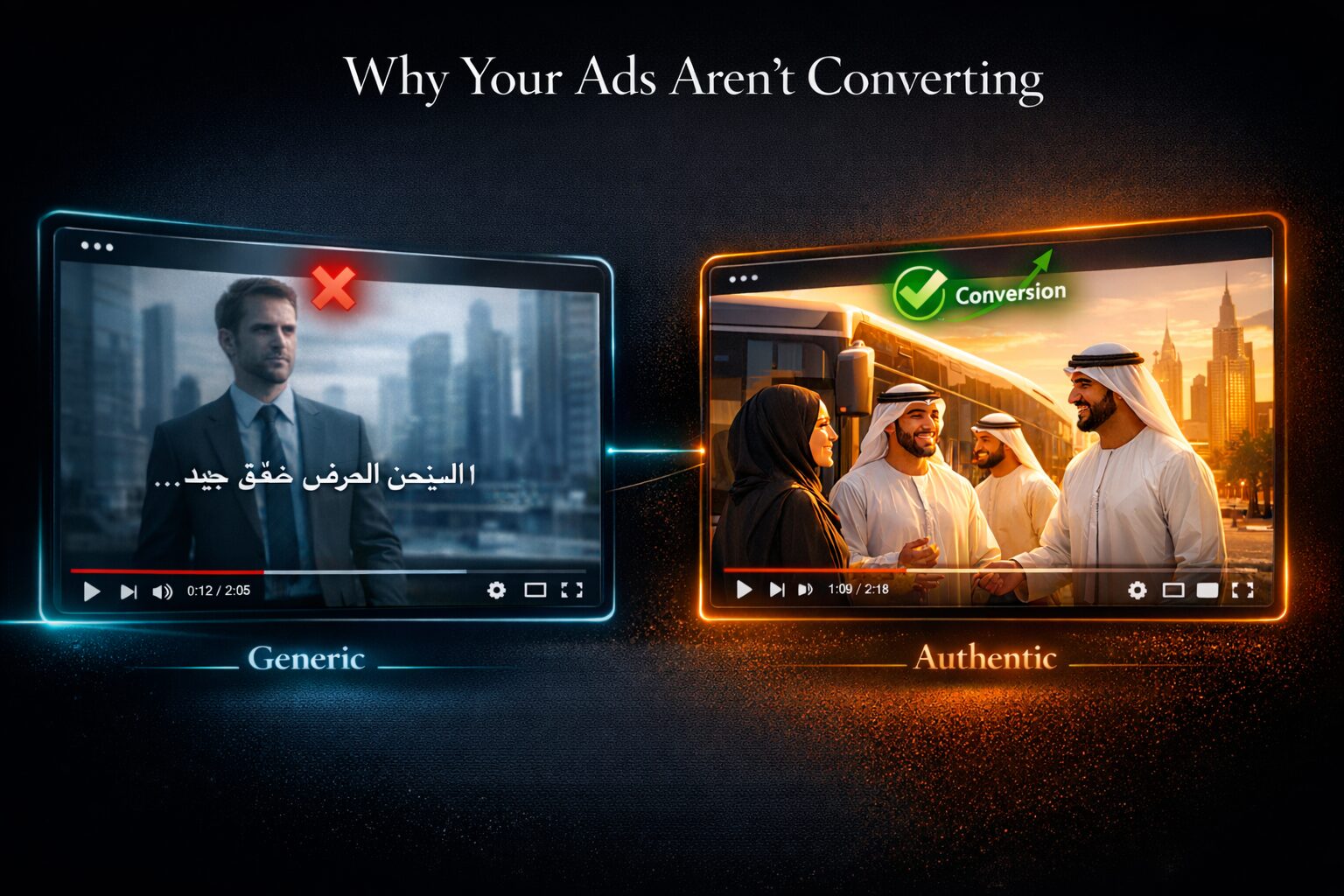
    This can result in ads where the lines feel like they were “Google-translated,” the accents are wrong, or the visuals don’t feel authentic. When an audience senses that an ad wasn’t truly made for them, they disengage. The creative message is lost, and the campaign fails to convert.

    Keys to Creating Video Ads That Truly Connect

    Creating successful video ads for the Gulf requires moving beyond surface-level changes. It means respecting the region’s diversity and getting the small details right.

    Go Deeper Than Translation: Master the Dialect

    Arabic is not a monolith. The dialect spoken in the UAE is different from that in Saudi Arabia or Oman. Using the wrong one can immediately alienate your audience. True localization means understanding these differences. For one campaign, we produced two separate versions for Saudi Arabia alone: one in the Hijazi dialect and another in Khaliji. This level of detail ensures your message is not just understood, but felt.

    Master the Visual Details

    The cultural nuances go far beyond language. They are woven into the fabric of daily life, and your visuals must reflect that. An authentic ad considers everything:

    • Wardrobe: Is the Kandora collar correct for the specific country you’re targeting? An Omani collar is “much more embroidered” than the style worn in the UAE.
    • Setting: Do the props and set design feel local and genuine?
    • Sensitivities: Elements that are neutral in one culture can be inappropriate in another. For example, in some parts of the Gulf, showing a dog in an ad is fine, while in others, “it’s not okay.”

    Getting these details right shows respect and builds trust with your audience.

    Case Study: How a Brave Creative Choice Led to 300M+ Views

    While avoiding cultural missteps is crucial, creating truly great creative video ads also requires smart creative risks. Our animated film for Emirates NBD is a perfect example.

    The initial request was to set the film in a realistic, recognizable Dubai. However, we felt this might limit the story’s appeal. The brave creative choice was to instead build a “fictional city.” We blended global architectural styles with specific, authentic local details like Dubai’s RTA buses and number plates.

    This decision transformed the film. The story became universal, allowing it to connect with audiences far beyond the UAE. It went viral globally with over 300 million views and proved that the right creative choice—one that prioritizes a universal feeling over a literal depiction—is what truly converts.

    A successful video ad campaign in the Gulf isn’t about playing it safe. It’s about being smart, respectful, and creative enough to show your audience that you truly understand them.

    If you’re ready to create video ads that resonate, let’s talk.

    Contact Hanzo Films today to get started.

  • How to Manage a Multi-Location Ad Film Production in MENA

    How to Manage a Multi-Location Ad Film Production in MENA

    Managing Multi-Location Shoots: A Guide from Film Production Companies in Dubai

    A global campaign that speaks to audiences in different countries is an ambitious goal. But executing a shoot across multiple filming locations brings a huge set of logistical and creative challenges. How do you ensure a film shot in Nigeria feels like it belongs to the same campaign as one shot in Poland?

    As a production house with offices in Dubai, Singapore, and Mumbai, we’ve managed complex international shoots for years. Success requires more than just a great idea; it demands meticulous planning and a deep understanding of how to make a global vision work on the ground.

    The Biggest Challenge: Keeping Your Campaign Consistent

    The single biggest hurdle in a multi-location shoot is consistency. It’s not just about using the same logo. The lighting, the quality, the production design, and the overall tone must feel unified. The biggest challenge is to make everything look like “it’s the same campaign.”

    This is harder than it sounds. A set builder in one country may not work the same way as a set builder in another. Local crews have different dynamics, and equipment availability can vary. Without a strong, centralized plan, you risk ending up with a series of disconnected films instead of one cohesive campaign.

    How to Ensure a Smooth Multi-Location Production

    From our experience, a successful multi-location shoot comes down to mastering the details before the cameras start rolling. Here are our key pieces of advice for any brand planning a global video advertising campaign.

    Plan for Hidden Logistical Hurdles

    Shooting internationally involves more than just booking flights. Each country has its own rules. For one project, we had to cast child actors from the UK. This required us to get an appointment with a family court judge to legally approve the child’s overseas travel for work. This is an “insider detail that clients might not even know about,” but failing to plan for it can derail a timeline. You have to account for different visa requirements, work permits, and local laws from day one.

    Centralize the Creative Vision

    While the execution is local, the creative direction must be unified. For any multi-location project, we create a master plan for the look and feel. A great production house will define the core creative elements that local teams must follow.

    As our founder, Hijaz Moosa, explains, this process is about adaptability. “A set builder in Nigeria does not work the same way as a set builder in Dubai,” he notes. “They use different materials… but the final output still has to look the same. So that part is very challenging.” By providing a clear creative blueprint, we ensure every local team is building towards the same vision.

    Avoid the Last-Minute Approval Trap

    The most common mistake we see brands make is “leaving approvals till the last minute.” On a standard shoot, this is risky. On a multi-location shoot, it can be fatal. Complex international productions require booking crews, securing permits, and managing travel logistics weeks or months in advance. A delay of a few days on a key approval can have a massive domino effect, causing scheduling conflicts and budget overruns across multiple countries.

    Success Story: A Cohesive Campaign Across Four Continents

    We put this approach into practice for the electronics brand Techno Mobile. The campaign’s goal was to celebrate authentic skin tones, featuring local celebrities in different markets.

    • The Challenge: We had to shoot four separate films in Saudi Arabia, Indonesia, Nigeria, and Poland, each with its own local hero.
    • Our Solution: We created a single, unified “layout and set” design that could be perfectly replicated by our local crews in each country. The color palette of each backdrop was even tailored to be “consistent with the skin tone of that person.”
    • The Result: Despite the logistical complexity of coordinating four different shoots, the final campaign was perfectly cohesive. Each film felt authentic to its local market while clearly belonging to a single, powerful global brand story.

    A multi-location production is one of the most complex projects a brand can undertake. But with the right planning and an experienced partner, you can create a truly global campaign that connects with audiences everywhere.

    If you’re looking for film production companies in Dubai with proven experience in managing international shoots, let’s talk.

    Contact Hanzo Films today to discuss your next project.

  • 3D Animation Video Production: From Concept to Final Render

    3D Animation Video Production: From Concept to Final Render

    The Real Process Behind 3D Animation Video Production

    3D animation video production offers incredible creative possibilities, but it can also seem complex and unpredictable, especially regarding costs and timelines. Brands often ask us: “How long will it take?” or “What’s the biggest cost driver?” The truth is, it depends. Animation isn’t a one-size-fits-all process.

    As an award-winning production company specializing in 3D animation video production, we know that success starts long before the rendering begins. It’s about making smart choices upfront and understanding the factors that truly impact the final product.

    From Idea to Workable Concept: The Crucial First Steps

    Turning a brief into a compelling animation starts with a solid foundation that involves these critical, sequential phases:

    Assembling the Right Team

    The first step involves assembling a team specifically suited for the project. This team typically includes concept designers, storyboard artists, 3D modelers, animators, and render specialists.The selection process focuses on matching talent whose skills and style are the best possible fit for the particular script and the reference that the client wants. We ensure the right expertise is engaged from the start.

    Defining the Direction: Treatment & Concept Sketches

    Once the team is assembled, the focus shifts to translating the core idea into a visual plan. We achieve this by developing a treatment note and concept sketches. This is a vital step. It ensures everyone, including the client, agrees on the visual style and overall direction early on. Getting this alignment before major production starts is key.

    This phase is also the time to decide on the best technical approach. For example, the team will consider if full 3D is needed for every part of the project. Sometimes, using 2D techniques for certain elements or sequences might be more effective or efficient based on the specific creative goals.

    Storyboarding: The Blueprint for Production

    A detailed storyboard acts as the blueprint. It helps everyone visualize the flow, determines the number of shots, characters, and environments needed, and allows us to accurately estimate timelines and resources.

    What Really Drives Animated Video Production Cost?

    Several factors influence the final budget for video production and animation. Understanding these helps set realistic expectations.

    1. Talent Quality: The Biggest Variable

    The skill of the artists is paramount. We know that better animators cost a lot more, and top global talent is in high demand, often working with major studios. Securing the right level of expertise for your project’s needs is a significant part of the animated video production cost.

    2. Complexity: Characters and Environments

    More detail means more time and resources. Key elements include:

    • Number of Characters & Environments: Each unique character and setting needs to be designed, modeled, and textured.
    • Character Design Detail: Highly detailed characters require more intricate modeling and rigging.
    • Environment Complexity: Building elaborate 3D worlds naturally takes longer than creating simple scenes. For shots requiring a sense of vast scale, using detailed 2D painted backdrops can often be a more efficient solution compared to constructing the entire environment in 3D.

    3. Rendering Time

    Generating the final images is computationally intensive. Complex scenes, detailed lighting, and high character counts significantly increase rendering time. Often, we utilize external render farms (specialized computer clusters) to handle this workload efficiently.

    Beyond Looks: Creating Emotional Connection

    Great animation isn’t just technically proficient; it needs to connect emotionally. This relies heavily on character development.

    Designing Lovable Characters

    Success starts with character design that allows for nuance and expression – creating characters that “people can invest emotions into them.”

    Realistic Movement Through Rigging

    How characters move is vital for emotional connection. A key technique involves using real human actors as a reference. Filming actors performing the required actions provides invaluable data for the animation rigging process. This reference ensures that even exaggerated movements remain grounded in realistic physics and biomechanics, making the animated characters’ actions feel more believable and relatable to the audience.

    Keep the Story Simple

    Animation thrives on clarity. We advise clients to avoid overly complex plots. “Animation is not a medium where you can have very nuanced plot points.” Like many successful animated films, focusing on universal emotions and straightforward narratives allows the visuals and character performance to shine. We’ve found that avoiding dialogue and letting music and visuals carry the story often leads to a more powerful connection.

    The Role of Technology and Tools

    We utilize a range of industry-standard software like Maya, Blender, Cinema 4D, and increasingly, Unreal Engine for its ability to create hyper-realistic environments quickly. While tools like AI are emerging, their impact on the core creative aspects of 3D animation video production is still limited. AI might speed up mechanical tasks, but crafting unique, emotionally resonant characters remains a fundamentally human skill at this point in time.

    Choosing the right approach and the right team is key to unlocking the power of animation. Whether it’s complex 3D or strategic use of 2D, we focus on the best path to bring your story to life effectively and efficiently.

  • Case Study: How Our Film Production Company Drove $3M in Earned Media for a Regional Brand

    Case Study: How Our Film Production Company Drove $3M in Earned Media for a Regional Brand

    How Hanzo Film Production Company Drove ROI for a Regional Brand

    Every brand wants a return on their investment. When it comes to video, that ROI often comes from organic reach and earned media; audiences sharing your content because they genuinely connect with it. As an award-winning film production company that has created films for global brands like IKEA, Nissan, and McDonald’s, we’ve seen one truth play out time and again: you can’t force a connection.

    The most successful brand films don’t feel like ads at all. They prioritize story over the sale. Here’s our insider take on how to approach your next film to drive real, measurable results.

    The ROI Killer: A Common Branding Mistake

    We see brands make one frequent misstep that almost guarantees a film won’t be shared. They treat the screen like a billboard.

    The instinct is to ask for more branding: a bigger logo, more product shots, more direct messaging. The thinking is that if you’re paying for a film, your brand should be the star. In reality, this approach is the fastest way to lose your audience. People have a sixth sense for a sales pitch, and they will tune out immediately. This kills shareability, limits your reach to paid media, and prevents you from earning the massive ROI that a viral hit can deliver.

    How to Drive Real ROI: Focus on the Narrative

    The solution is to flip the model. Instead of inserting a story into a brand message, you must weave your brand values into a powerful, universal story.

    Prioritize Radical Simplicity

    Our most successful project taught us that the most impactful creative choice was “to keep the storytelling extremely simple.” A story that relies on core emotions and clear body language will resonate with anyone, anywhere, regardless of language or culture. Don’t overcomplicate the script or narration. If the emotion is true, the audience will feel it.

    Let Your Brand Values Do the Talking

    Your brand doesn’t need to be the hero of the story, but its values should be the foundation. For one major banking client, we knew “Emirates NBD has a strong CSR and volunteering program, which aligned naturally with the story.” We didn’t need to mention the program. The story of giving was a direct reflection of their values. This creates a much deeper, more authentic connection than a logo ever could.

    Embrace Subtle Branding

    Trust your production partner to integrate your brand in a way that feels authentic. For that same banking client, the directive was clear: “they didn’t want it to become a typical brand film.” The only direct branding in the entire film was a single, quick shot of an ATM. By allowing the story to breathe, the brand became associated with a powerful, positive emotion rather than just a product.

    Proof in Practice: The “Give in to Giving” Success Story

    We were tasked by Emirates NBD to create a film promoting a local volunteering campaign. By focusing on a simple, emotional narrative and keeping the branding subtle, we collaborated to produce a film that delivered unprecedented ROI.

    The results went far beyond the original local goal:

    • It became the most-watched animated commercial launched from the region, with over 300 million views.
    • It went viral in more than 25 countries, with massive organic reach in unexpected markets like Brazil.
    • The client earned an estimated $3 million in free media time (earned media).
    • It won over 27 international awards.

    The film was so universally understood that, as our team discovered, it “was even shared on WhatsApp family groups, often mislabeled as the Oscar-winning short film Piper.” This is the power of a story-first approach. It transforms a commercial into a piece of art that people actively want to share.

    Ready to Create a Film That Delivers Results?

    Choosing to prioritize your story is the first step toward creating a film that not only captures attention but also drives significant business value. Don’t settle for a film that just looks good; demand a film that works for you.

    If you’re ready for cinematic storytelling that moves markets, contact Hanzo Films today.

  • How UAE Production Companies Are Redefining Regional Advertising in 2025

    How UAE Production Companies Are Redefining Regional Advertising in 2025

    UAE Regional Advertising Trends in 2025

    In 2025, the advertising landscape in the UAE is moving faster than ever. New trends appear constantly, but not all of them deliver results. As an award-winning production house on the ground, we see what’s truly capturing audience attention versus what’s just creating noise.

    For brands looking to make a real impact this year, it’s crucial to distinguish between a fleeting fad and a trend with true staying power. Here is our insider guide to the regional advertising trends that are actually working.

    The Trend to Watch Out For: Style Over Substance

    A major trend we’re seeing is a focus on flashy visuals to hide a weak story. Many ads today look stunning on the surface. They have slick camera work and beautiful graphics. But they are often missing the single most important element: a strong, emotional narrative.

    When an ad prioritizes style over substance, it fails to make a real connection. The audience may be momentarily impressed, but the message doesn’t stick. The film is quickly forgotten, and the client’s investment doesn’t deliver a meaningful return.

    The Trends That Actually Drive Results

    To get real ROI, brands need to focus on trends that build a genuine connection. Here are the three key trends we are using at Hanzo Films to create successful campaigns in 2025.

    Trend #1: Radical Authenticity

    Audiences can spot an overly staged commercial from a mile away. The new standard is authenticity, even if it means looking less perfect.

    For a recent Bridgestone film, we shot with both high-end cinema cameras and a simple handycam. When we reviewed the footage, we found that most of the final cut featured handycam footage. The raw, shaky look felt more real and relatable. The lesson here is that a genuine feeling will always be more powerful than a flawless picture.

    Trend #2: Flawless Cultural Nuance

    While the core story might be universal, the execution must be local. One of our most critical roles as a production house is to ensure every detail is right for the region. As we often clarify with our partners, one among our main responsibilities is cultural nuance- wardrobe, performance, art direction, etc.

    Getting these details right isn’t just about respect; it’s about effectiveness. An ad that reflects a deep understanding of the local culture will always resonate more strongly with its intended audience. This is a trend that will never go out of style.

    Trend #3: Calculated Creative Risks

    The days of safe, predictable advertising are fading. Today, brands that are willing to take smart creative risks are the ones reaping the biggest rewards.

    For our Etihad Airways x Mission Impossible 7 project, we faced major production uncertainties. A key question was “whether sound could be captured during free fall.” It was a huge technical gamble. We took the risk, and it paid off, resulting in a truly unique film. This trend is about creating unforgettable experiences that stand out from the crowd.

    Final Thoughts: Story Is Still King

    In 2025, the most powerful trends in UAE advertising aren’t about technology or visual tricks. They are about telling authentic stories, showing deep cultural respect, and making brave creative choices. These are the elements that create a lasting impact.

    If you are ready to create a film that truly connects, our team is here to help. Contact Hanzo Films today.

  • From Concept to Screen: 5 Secrets from a Dubai Film Production Agency

    From Concept to Screen: 5 Secrets from a Dubai Film Production Agency

    Pulling Back the Curtain: A Look Inside Our Dubai Production House

    The final cut of a film is a kind of magic. It’s a seamless story that flows from one perfect shot to the next. But behind that magic is a detailed process and a set of principles that guide the project from a simple idea to a cinematic final product. As one of the established production houses in UAE, we believe our process is what sets our work apart.

    We’re pulling back the curtain to share five “secrets” from our own workflow. These are the core beliefs and film production skills that we bring to every project.

    Secret #1: Our Success Starts Long Before the Camera Rolls

    The most important work on any film happens in pre-production. This is where the foundation for the entire project is built, and getting it right is a non-negotiable step.

    Investing in the Entire Creative Team

    A common mistake is to invest heavily in a big-name director while cutting corners on the rest of the production. We believe a production designer is nearly as important as the director in bringing a vision to life. That’s why we focus on choosing the right crew for the specific creative brief and investing in every single role, from the first AD and editor to the colorist and wardrobe team. Ensuring the entire team is aligned on schedules and their individual deliverables is a critical step that makes everything else possible.

    Secret #2: Finding Magic in the Unexpected

    While we plan everything meticulously, filmmaking is a creative journey. Sometimes the most powerful moments are the ones you could never have scripted.

    Building Real Chemistry On and Off-Screen

    On a shoot for a film about two young best friends, we needed to capture a genuine bond. To make their friendship feel real, we brought the two child actors together for three days before filming even began. They spent time together, went shopping, and simply got to know each other. By the time the cameras were rolling, they had become real-life best friends, and that authentic chemistry became the heart of the film. Watch how this real connection brought the story to life in the Fatima and Shirley production.

    Problem-Solving at 10,000 Feet

    During another production, we had musicians performing a stunt that involved jumping from an altitude of around 10,000 feet. The high wind speeds caused some of the GoPro cameras attached to their instruments to break off and fall. Fortunately, we had attached AirTags to the cameras, which allowed the crew to locate them on the ground and retrieve the undamaged footage. Discover the full story behind this high-stakes shoot for the Etihad Airways x Mission Impossible 7 collaboration.

    Secret #3: Our Creative Process is Non-Negotiable

    How do we adapt our creative process for a project with a tight budget or timeline? The simple answer is: we don’t.

    Our policy is to only accept a project if we are absolutely certain we can deliver the best possible outcome within the given constraints. We will not compromise our creative process, because our focus is always on creating a very good film. This principle holds true whether it’s a $10,000 project or a multimillion-dollar one, which we believe is a key reason we’re placed among the top production houses in Dubai.

    Secret #4: The On-Set Culture That Inspires Creativity

    The energy on a film set has a direct impact on the quality of the final product. That’s why we have a unique but simple rule that everyone on our team follows: no one shouts on set.

    The primary thing that keeps our team motivated is the shared objective of creating a great film. We treat every project as a filmmaking process, not just a service business. This shared passion and respectful environment inspire the kind of talented directors and photographers we love to collaborate with.

    Secret #5: The Final Polish: Our Trade Secrets in Post-Production

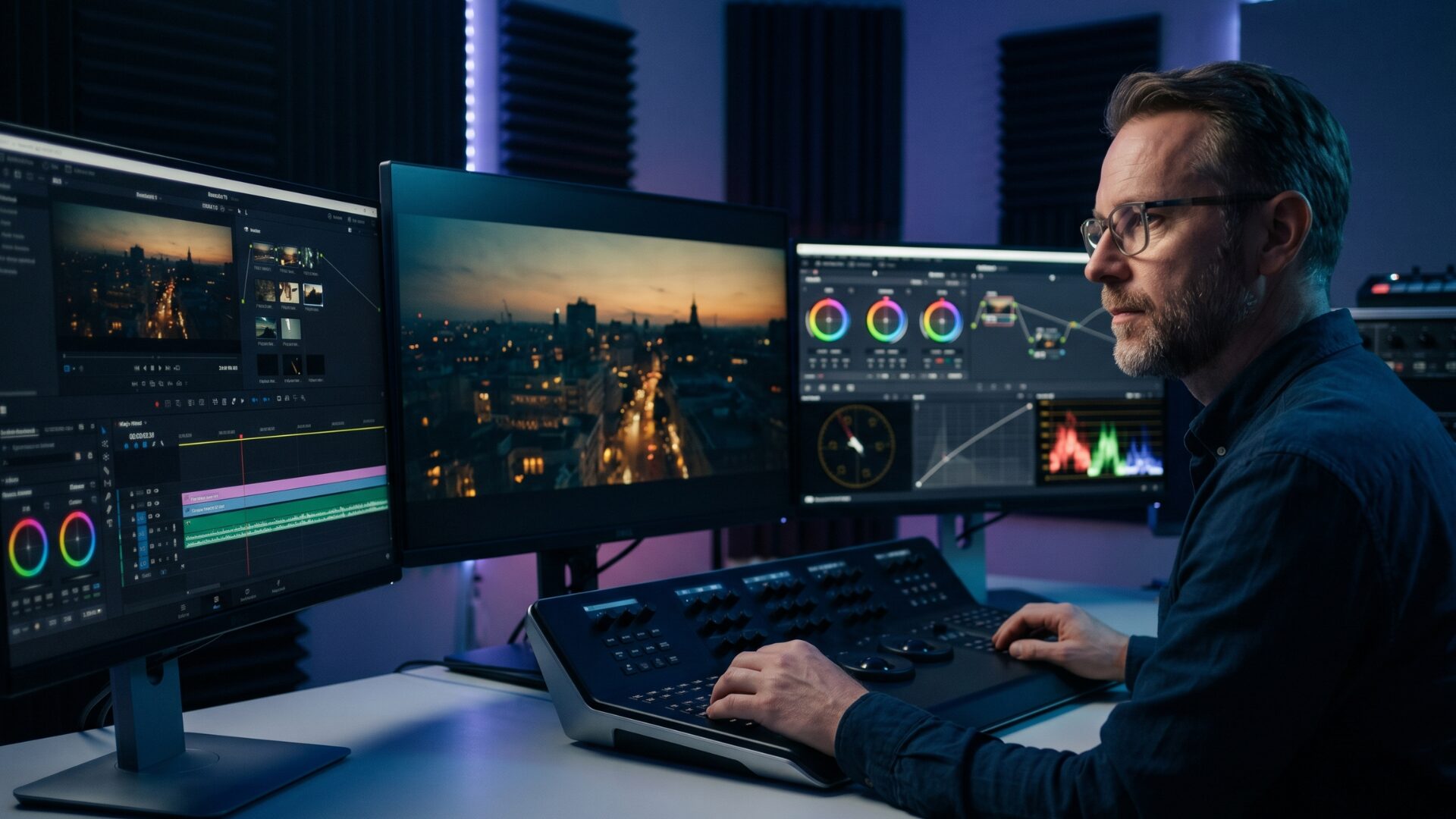
    Post-production is where the film truly comes to life. For us, two areas are our trade secrets: the music and the color grading.

    The Power of Sound and Music

    We avoid using library music as much as possible. Instead, we prefer to work with the best composers available to fit the project, whether they’re based in Latin America or Europe or any other part of the globe. This allows us to create a custom score that elevates the story.

    Crafting a Timeless Visual Texture

    We love the unique, rich texture of 35mm film. While we shoot on film when we can, we often work with digital formats for convenience. In those cases, we dedicate significant effort during the color grading process to give the footage that distinct filmic look, ensuring every project we deliver has a timeless quality.

    Partner with a Leading Film Production Agency

    These “secrets” are really just a deep-seated commitment to the craft of filmmaking. It’s a philosophy that ensures every project we undertake is treated with the passion and excellence it deserves.If your brand is ready to tell its story with passion and excellence, let’s talk.

  • Choosing a Video Production Company in Dubai: Insider Tips

    Choosing a Video Production Company in Dubai: Insider Tips

    Choosing the Right Video Production Company in Dubai

    Dubai’s market is buzzing with content, and making your brand stand out requires more than just a good-looking video. It requires a story that connects and a production that shines. As an award-winning production house in Dubai, we’ve seen firsthand what separates a successful film from a forgotten one.

    Choosing the right partner is critical. Here are our insider tips, based on years of experience, to help you find a video production company in Dubai that will bring your vision to life.

    Avoid Common Pitfalls When Selecting a Production House

    Over the years, we’ve noticed brands make a few common mistakes when choosing a partner. Here’s what to watch out for.

    The “Existing Relationship” Trap

    One of the biggest mistakes we see is brands defaulting to a production house simply because they have an existing relationship. While loyalty is great, every film has a very specific requirement. A production house that excels at fashion films might not be the best fit for a narrative-driven FMCG campaign.

    How to avoid it: Treat every campaign as a new opportunity. Always choose a team based on their specific strengths and how they align with your project’s goals.

    Budget Allocation: More Than Just Famous Faces

    Another frequent misstep is putting a lot of money into the on-screen talent and very little into the actual production. This approach can seriously affect the final output, leaving you with a film that doesn’t do justice to your brand or the talent involved.

    Beware of Unrealistic Promises

    Be cautious of production companies that say “yes” to everything and promise you the world, often at a very low price. Some companies, in a bid to win projects, will agree to tight budgets and impossible timelines without being realistic about what they can deliver. We believe in transparency and will only take on a project if we are absolutely sure we can deliver the best possible outcome within the given budget and timeline.

    Key Questions to Ask Before You Commit

    The most prepared clients know what to ask. Here are a few questions you should have on your list when speaking with media production companies in Dubai.

    “Is Your Crew In-House or Freelance?”

    This is a crucial question. There are advantages to both models:

    • In-house crews often mean that timelines are strictly kept because their availability is controlled by the company.
    • Freelance crews offer the flexibility to bring in specialists perfectly suited to your brief. For example, if you need someone who has extensive experience with automotive shoots, a production house that works with top freelance talent can bring that specific expertise to your project.

    “How Will You Choose the Team for This Project?”

    A great follow-up question is whether the crew has been chosen specifically for your brief or if it’s just the team they have available. This shows you’re looking for a partner who thinks strategically about creative resources.

    What to Look for in a Portfolio

    A portfolio is more than a highlight reel. It’s evidence of capability. When reviewing the work of different production companies in Dubai, look for these key things:

    • Quality and Production Value: Assess the overall quality of the work, the clients they partner with, and the tangible production value on screen.
    • Storytelling Effectiveness: How well did the film communicate the core idea and message to its intended audience?
    • Proven Success: Look for awards and, just as importantly, see how popular their work is. A film that gets a lot of airtime or goes viral is a strong sign of effective work.
    • Capability for Complex Campaigns: If you’re planning a large-scale project, check their portfolio for experience with celebrity work, major brand launches, or multi-location shoots. This previous work is the clearest indicator of what they’re capable of handling.

    The Proof Is in the Pudding: A Success Story

    We were tasked with creating an animated film for Emirates NBD. By being realistic about timelines and focusing on quality, we collaborated with the client to produce a film that became the most-watched animated commercial ever launched globally.

    The results speak for themselves:

    • Over 300 million views across all social media platforms
    • Went viral in more than 25 countries
    • Won over 27 awards (and counting)

    This project is a testament to what can be achieved when a client and a production house are fully aligned on creating something exceptional.

    Ready to Work With a Top Video Production Company in Dubai?

    Choosing the right production partner is the first step toward creating a film that not only looks stunning but also delivers results. Don’t settle for “good enough.”

    If you’re ready for cinematic storytelling that moves markets, contact Hanzo Films today. Let’s create something amazing together.